
BEFORE YOU BEGIN
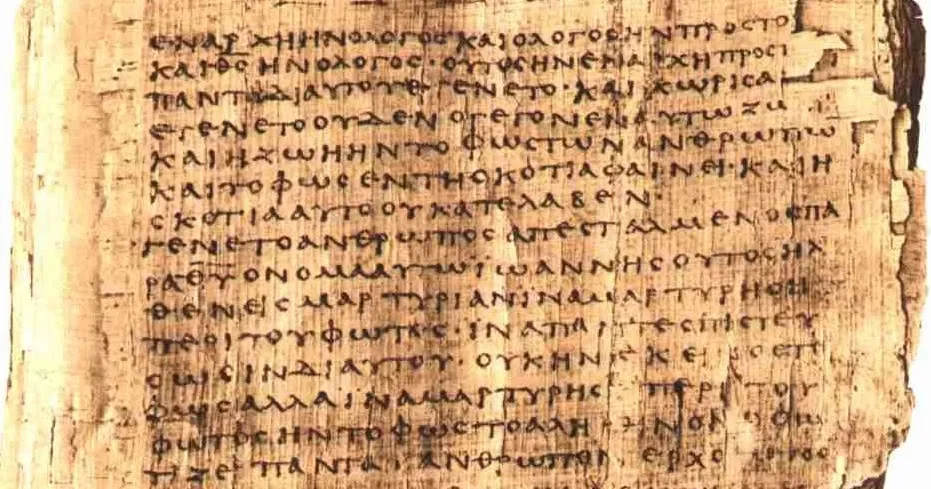
Papyrus 66, one source of the Gospel of John
This course is based on the Gospel of John, of which there are many translations. I could teach a whole multi-year course on the origins of the most common versions of this Gospel we have today. It would take years, maybe lifetimes.
Just know that there is no one Gospel of John, no one original manuscript, and definitely no final version today.
Take for example John 10:10 that we have in the following English versions:
New International Version: The thief comes only to steal and kill and destroy; I have come that they may have life, and have it to the full.
King James Version: The thief cometh not, but for to steal, and to kill, and to destroy: I am come that they might have life, and that they might have it more abundantly.
New Revised Standard Version: The thief comes only to steal and kill and destroy. I came that they may have life, and have it abundantly.
The Message: A thief is only there to steal and kill and destroy. I came so they can have real and eternal life, more and better life than they ever dreamed of.
So what are we faithful seekers to do? Explore different texts, find out why the text was written and by whom, give yourself permisson to prefer certain texts over others. I believe the Gospels are ongoing revelations of which you are a part!. Have fun!
About the Gospel
Just to give you a nerdy lil’ taste of how complex it is to figure out who wrote this Gospel and using which sources, here’s what Wikipedia has to say about the matter:
The Gospel of John is traditionally attributed to John the Apostle. While many modern scholars continue to affirm the traditional attribution, most reject this hypothesis, though they view the beloved disciple as the source of much of John's content. The gospel is internally anonymous. John 21:22 references a disciple whom Jesus loved and John 21:24–25 says: "This is the disciple who is testifying to these things and has written them, and we know that his testimony is true". Most scholars believe the verses claim the beloved disciple was the author of the gospel, but others argue the author is claiming to be someone else recording the disciple's testimony.There is a consensus among Johannine scholars that the beloved disciple was a real historical person, but there is no consensus on who the beloved disciple was. John 1:14 also switches to a first-person narration, saying "And the Word became flesh and tabernacled among us, and we have seen his glory, the glory as of a father's only son, full of grace and truth," revealing himself as a participant in the events narrated. The scholarly consensus dates the writing of the gospel between AD 90–100. Most critical commentaries agree the gospel was likely composed in Ephesus.
Recent scholarship has tended to turn against positing hypothetical sources for John. While a few scholars support old ideas about debated sources like the "signs source" and the "sayings source", or develop new theories, it is widely considered that John incorporated synoptic traditions into his own composition instead. For much of the twentieth century, the consensus was that John was independent of the Synoptics, but most scholars now accept the Synoptics as sources for John. The Hebrew scriptures were an important source, with 14 direct quotations (versus 27 in Mark, 54 in Matthew, 24 in Luke), and their influence is vastly increased when allusions and echoes are included, but the majority of John's direct quotations do not agree exactly with any known version of the Jewish scriptures. The author may claim to be a witness in John 21, 1:14, and 19:35. Most scholars agree the Gospels do not contain direct eyewitness accounts, though this may partly be the result of dubious assumptions based on form criticism.